
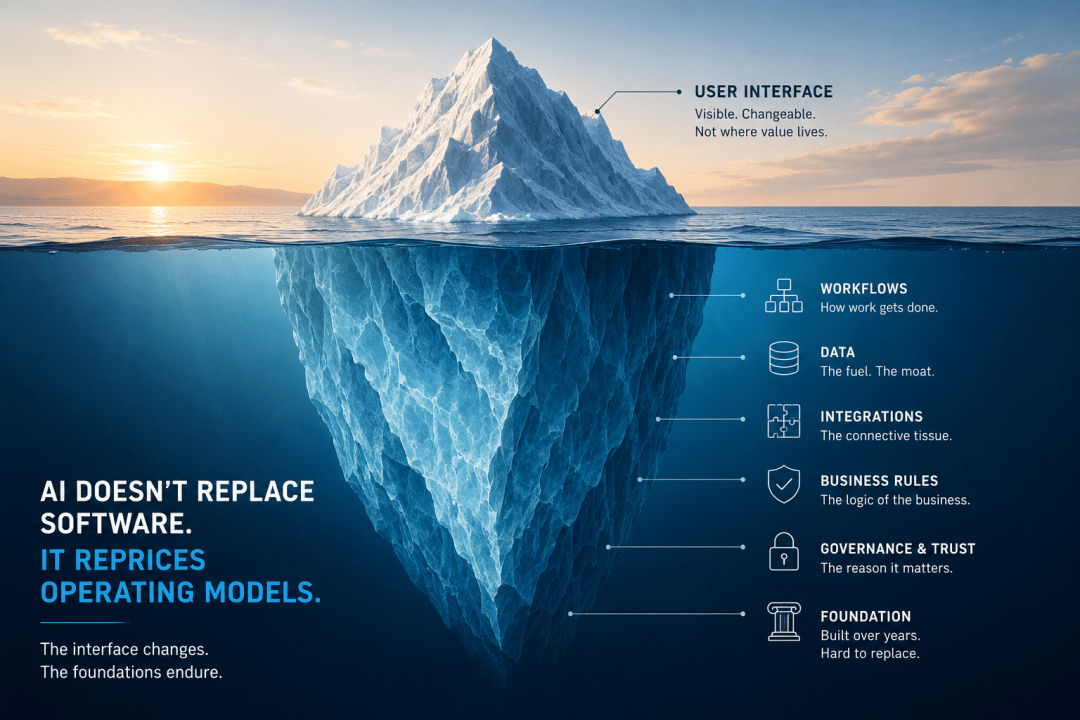
AI isn’t killing SaaS. It’s repricing the economics of the entire software industry. While AI-native companies redefine productivity and revenue per employee, enterprise software vendors face a more fundamental challenge: proving where their real value lies. The future won’t belong to the companies with the flashiest AI features—it will belong to those that own workflows, absorb complexity, and redesign their operating models.
My Blog
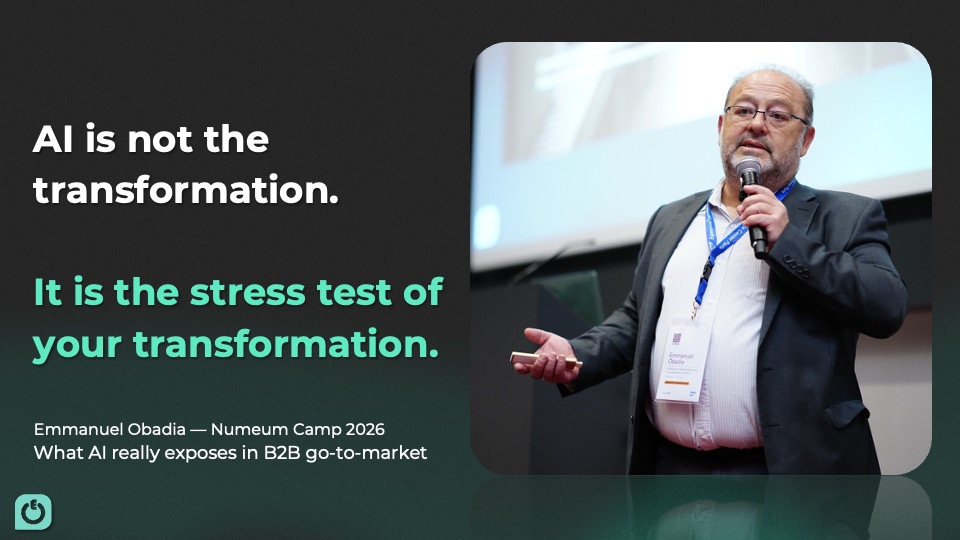
AI Is Not Your GTM Strategy. It Is Your Go-To-Market Stress Test.
AI does not fix weak go-to-market strategy. It exposes it. Why B2B leaders must rethink GTM clarity, buyer journeys, GEO, trust and proof in the AI era.
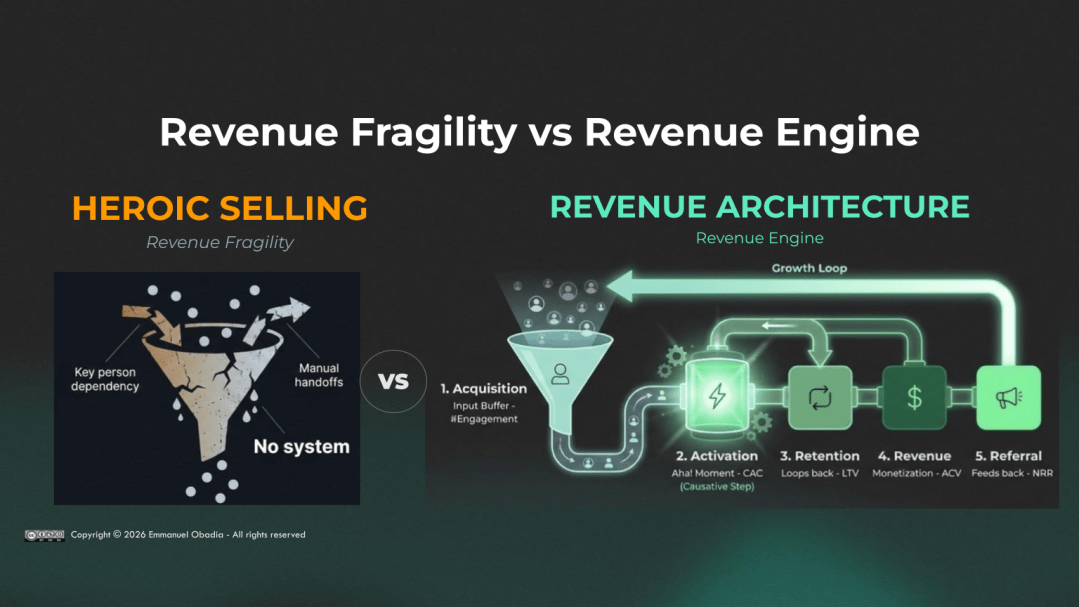
Most Companies Don’t Have a Sales Problem. They Have Revenue Fragility.
Most companies don't have a sales problem. They have a revenue fragility problem. When growth depends on a few key people, heroic effort, or untested assumptions, the system is one resignation away from collapse. This article explains how to move from commercial craftsmanship to Revenue Architecture — a designed, scalable, predictable engine.
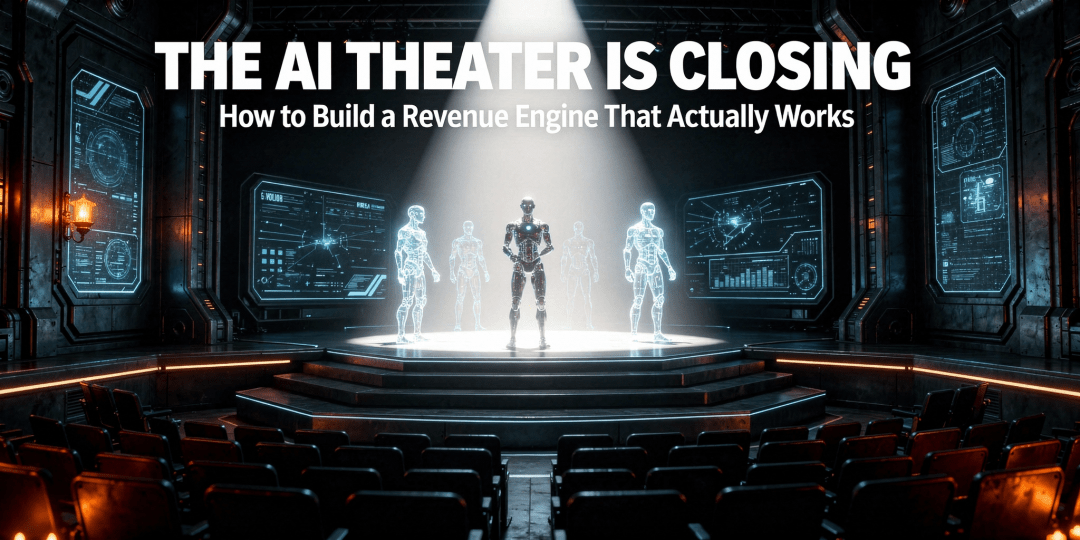
The AI Theater is Closing: How to Build a Revenue Engine That Actually Works
Stop the "AI Theater." Learn how to move from AI hype to value realization by redesigning your revenue engine and GTM strategy for 2025 and beyond.

The AI ROI Gap: Why Your “Fuzzy Go-To-Market” Is a Wealth Destroyer
2025 exposed the Great AI Delusion: companies squandered funds on AI without addressing their 'Fuzzy GTM.' AI doesn’t create performance; it amplifies flaws—igniting faster failure rather than growth. To scale in 2026, leadership must shift from 'AI Theater' to a Growth Operating System rooted in Customer Truth and execution. Embrace clarity or dry up.

Why Most B2B Segmentation Fails — And How the Minimum Viable Segment Changes Everything
Most B2B segmentation looks great on a slide—but fails in the real world. After interviewing dozens of finance and reporting leaders, a simple truth emerged: people don’t buy because of their ICP profile; they buy because of the moment they’re in. Traditional segmentation ignores the struggling moments, triggers, and thresholds that actually drive decisions. This article explains why most segmentation frameworks break—and how identifying your Minimum Viable Segment (MVS) transforms pipeline, messaging, and growth.

5 Surprising Truths About AI in CRM for SMBs (and a 30‑Day Pilot Plan)
AI in CRM isn’t a mega‑project. Here’s how SMBs get quick wins: data hygiene, task‑specific agents, and human moments that matter.
 Emmanuel Obadia & Partners | Transform & Innovate