

Introduction
In today’s crowded information landscape, where every brand is competing for consumer attention, the traditional method of one-off marketing campaigns is outdated. These isolated efforts are often ineffective, costly, and incapable of producing long-term results. The old approach—launching separate campaigns and hoping one will stick—fails to meet the demands of today’s B2B buyers. These buyers are more informed and expect personalized, seamless experiences. The future of marketing lies in a holistic, customer-focused approach that guides prospects through an end-to-end journey—one that doesn’t just generate attention but delivers real, lasting value at every step.
The Inefficacy of One-Off Campaigns
Think about the typical one-off campaign: it might grab attention for a moment, but it lacks depth and continuity. Once the campaign ends, potential buyers are left without a clear next step, and marketers have to start all over again. This lack of consistency makes it hard to build a lasting impression—it’s like shouting into the void. Modern B2B buyers expect more; they want meaningful, ongoing interactions, not quick, disconnected ads.
Take, for example, the failed ‘Laptop Hunters’ campaign by Microsoft in 2009, which poured significant resources into a flashy product launch aimed at comparing PC affordability to Macs. While it generated initial buzz, the campaign ultimately lacked a cohesive follow-up strategy to engage customers long-term. Initial interest was high, but without continued engagement, leads went cold, and the campaign ultimately flopped. Similarly, PepsiCo’s 2017 ‘Live for Now’ campaign suffered from an isolated social media blitz that garnered significant buzz but failed to drive meaningful engagement or conversions. The campaign lacked an integrated content strategy that would have created sustained, personalized follow-ups, leading to missed opportunities for deeper customer engagement. These examples illustrate that one-off campaigns often waste marketing budgets, produce minimal long-term value, and fail to nurture prospects effectively.
A Shift to an Integrated Approach: The Customer at the Core
Successful marketing today is all about engaging and nurturing relationships, not just until the sale, but far beyond it. In my recent keynote, I discussed how an end-to-end integrated campaign strategy can put the customer at the center of every interaction. This approach means creating an ongoing, adaptable system that builds connections throughout the entire customer journey—from Awareness all the way to Advocacy.

Imagine a potential customer’s journey with your brand. First, they see an interesting blog post or campaign video in the Awareness stage. Then, they move on to an ROI-focused webinar during the Consideration stage. When they’re ready to buy, they’re offered a demo or consultation during the Decision phase. After purchasing, they receive personalized support through onboarding content in the Purchase & Ownership stage. But the engagement doesn’t stop there—through Consumption and Advocacy phases, we aim to turn satisfied customers into brand champions. This journey isn’t just a series of separate steps; it’s a connected experience where each stage supports and builds on the previous one, fostering long-term loyalty.
Always-On and Adaptive: Harnessing Data-Driven Personalization
A key part of an integrated campaign strategy is being always-on. Content shouldn’t be delivered in bursts; instead, it should be part of an ongoing flow that reaches customers whenever they need it. Campaigns must also be adaptive, using data-driven insights to constantly fine-tune and improve engagement at every stage. This way, we ensure relevant, evolving interactions that adapt to customer needs. We’re not just broadcasting messages; we’re delivering the right content at the right time, making customers feel understood and valued.
Demonstrating Impact: A Case from Oracle

When I led marketing campaigns at Oracle for EMEA, we put this idea into practice for our Human Capital Management (HCM) solution first, and then leveraged the best practice for the ERP and CX solutions as well.
We started with an awareness campaign using synchronously all PESO media (Paid, Earned, Shared, Owned) to drive broad visibility and engagement. We leveraged a mix of digital advertising, social media engagement, public relations, and content marketing to maximize reach and generate initial interest across our target audience. Then, we added the Integrated Power Program (IPP) to focus on demand generation. The IPP involved creating a series of interconnected content pieces, webinars, Business Development Reps outbound reaches, and nurturing emails that helped us convert that initial interest into qualified leads. This worked exceptionally well for our volume business by driving a steady stream of interested prospects into our sales funnel. Building on that success, we moved into Account-Based Marketing (ABM) at scale aggressively for the 32,000 named accounts across EMEA, targeting high-value prospects with tailored messages and personalized outreach. We crafted specific content and offers for each account cluster, which helped us engage decision-makers directly. The ABM approach, combining 1to1, 1toFew and 1toMany flavors of it, led to significant wins, including increased conversion rates and higher deal sizes.
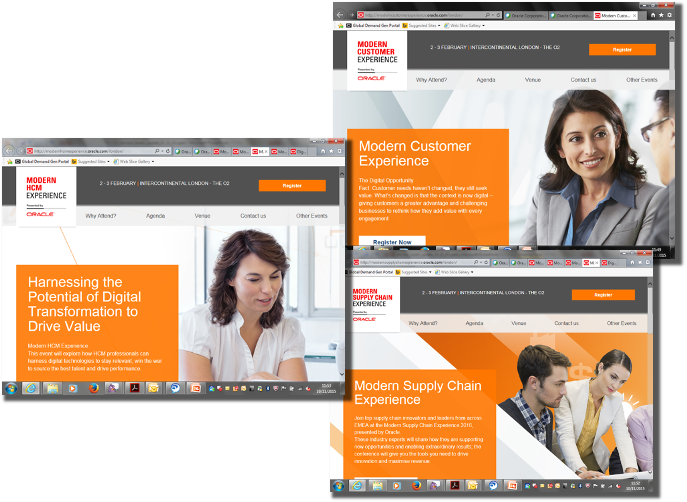
The results were impressive: we saw big improvements in metrics like Digital Engagement, in-person Meetings, and demo registrations. More importantly, we attracted higher-quality leads and gained more market share. These integrated strategies didn’t just work for HCM; they became best practices across Oracle’s other applications I was leading, such as ERP and CX, and even influenced our core business, including Database (DB) marketing. An integrated strategy does more than increase engagement—it turns prospects into clients and keeps them loyal.
Key Takeaways & Integrated Framework for Success

From Strategy to Execution to Results, achieving marketing success requires a unified approach. Here’s the framework that ensures maximum impact:
- Define Business Objectives & Understand Your Audience: Start with a solid foundation by identifying your business objectives and deeply understanding your audience. Effective marketing begins with clarity in purpose and alignment with audience needs.
- Develop Value Proposition & Campaigns: Craft compelling value propositions and campaigns that resonate with your target audience. The focus should be on aligning your message with the buyer’s journey and addressing their specific needs.
- Execute Integrated Campaigns: Implement campaigns across the buyer journey in a cohesive, synchronized manner. A successful campaign leverages multiple touchpoints and is adaptive to customer needs.
- Measure & Optimize: Close the loop by measuring your campaigns’ effectiveness, optimizing them based on performance, and continuously improving. Iteration and learning are the keys to staying competitive and ensuring high ROI.
A Unified Approach for Maximum Impact
- Harmonize Marketing Practices Across Teams: Consistent marketing practices lead to stronger global impact.
- Align Strategies, Objectives, and Sales: Integration between marketing and sales is crucial for achieving business goals.
- Create Customer-Centric Campaigns: Effective campaigns must engage customers at every stage of their journey.
- Measure, Learn, and Adapt: Continuous performance tracking and optimization are key to staying competitive.
Conclusion

This isn’t about small changes; it’s about completely rethinking how we approach marketing. We need to move beyond fragmented, one-off campaigns and focus on creating integrated, responsive journeys that drive not just conversions but long-lasting relationships. Marketing today is not just about making noise; it’s about delivering value at every stage of the buyer’s journey. The companies that will thrive are those that understand the power of cohesive, data-driven strategies that put customers first. Are you ready to be one of them?
Call to Action
I’d love to hear your thoughts. Are you already using integrated campaign strategies, or are you still finding it challenging to move away from one-off campaigns? Let’s start a conversation—share your comments below.
And as usual, if you feel I can help your organization directly, please engage with me directly.

 Emmanuel Obadia & Partners | Transform & Innovate