

- Rise of Tech Giants
- Impact of AI Revolution
- Innovator’s Dilemma in Tech
- Business Strategies for Tech Companies and Startups
- Conclusion: Navigate the Tech Revolution with Expert Guidance
Over the past decade, we’ve witnessed a seismic shift in the global economy, driven by the meteoric rise of technology companies. What was once a diverse landscape of competing firms has consolidated into a small group of behemoths that now dominate not just their sector, but the entire stock market. Let’s dive into this transformation, its implications, and the strategies that emerging companies can use to navigate this new landscape.
The Rise of the Tech Giants
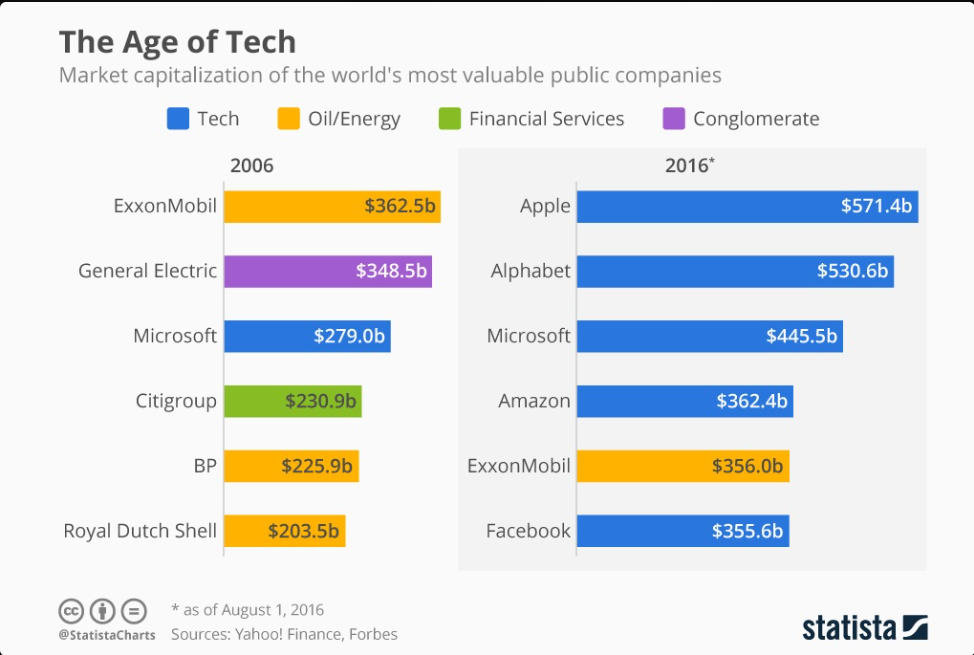
In 2014, Apple made history by becoming the first company to reach a $700 billion market cap. A decade later, the tech landscape has transformed dramatically, with multiple companies surpassing the $1 trillion valuation mark. Apple and Microsoft now compete for the top spot, each boasting valuations around $3 trillion. This unprecedented growth extends beyond established players, as evidenced by NVIDIA’s meteoric rise to a nearly $3 trillion market cap, propelled by the AI boom and showcasing the transformative potential of emerging technologies in reshaping industry valuations.
The Power of “The Six”

Scott Galloway, a well-known tech analyst and professor, has been widely recognized for his insightful analysis of major tech companies. In his best-selling book “The Four”, he delves into the dominance of Amazon, Apple, Facebook (now Meta), and Google (Alphabet) in the digital landscape, highlighting their unprecedented influence and impact on modern society. Building on this, Galloway has further extended his analysis to encompass “The Six,” which not only includes the aforementioned tech giants but also incorporates Microsoft and, on occasion, Netflix. By doing so, he emphasizes the increasingly pervasive reach and significance of these companies within the global tech ecosystem. As Galloway critically examines these industry behemoths, he underscores the formidable barriers they have erected, effectively entrenching themselves as essential components of consumer’s daily lives. Their ability to cater to an array of fundamental human needs, as pointed by Galloway, underscores the profound and enduring impact these companies have on the modern digital landscape.
- Amazon: Consumption
- Apple: Sex appeal (through luxury and status)
- Facebook: Love (social connection)
- Google: God (answering all questions)
This deep integration into our daily lives has fueled their unprecedented growth and influence.
The AI Revolution

The recent surge in AI development has indeed reshaped the tech landscape, impacting various sectors such as healthcare, finance, and transportation. Companies like NVIDIA and Microsoft have seen their valuations soar on the promise of AI, with investments pouring into research and development for AI applications. As observed by Galloway, the widespread adoption of AI technologies has the potential to be a game-changer, offering opportunities to increase productivity across industries. However, it also raises concerns about job displacement and the exacerbation of inequality, prompting crucial discussions on the ethical and societal implications of AI advancement.
Market Concentration and Its Implications
The rapid advancement of artificial intelligence has led to significant increases in the valuations of established tech giants, while also paving the way for emerging players in the field, including OpenAI, Anthropic, and DeepMind. This trend has the potential to disrupt the current tech hierarchy.
The growth of these tech giants has led to a significant concentration of market power. As of 2024, the top tech companies account for a substantial portion of the global stock market capitalization. This concentration raises concerns about market competition, innovation, and even the health of our democracies.
The Innovator’s Dilemma: From Tech Giants to AI Leaders
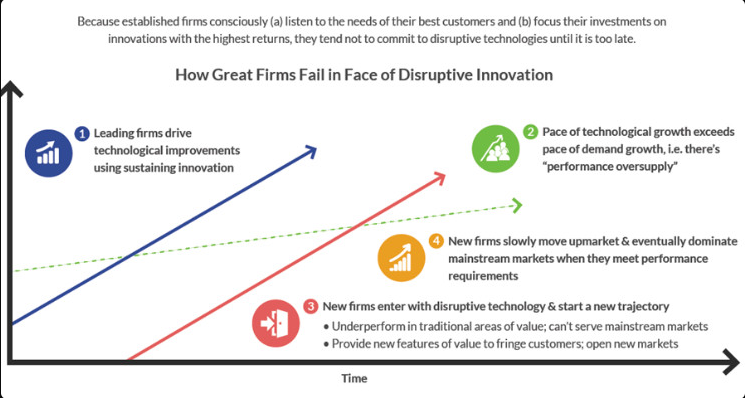

Clayton Christensen‘s theory of disruptive innovation provides a powerful framework for understanding the seismic shifts in the tech industry. This concept explains how established giants like Intel, IBM, and Cisco were displaced by GAFAM (Google, Apple, Facebook, Amazon, Microsoft). Intel’s focus on high-performance chips left them vulnerable to the mobile revolution and AI chip market, while IBM struggled with cloud computing despite early recognition of its potential. Cisco’s dominance in networking hardware was challenged by software-defined networking and cloud-native technologies. GAFAM disrupted the tech landscape by focusing on new markets and technologies initially overlooked by incumbents. As we enter the AI era, this pattern may repeat, with established tech giants facing potential disruption from AI-focused companies and startups. The ability to balance sustaining innovations with disruptive ones, and willingness to cannibalize successful products, will be crucial for companies aiming to thrive in the rapidly evolving tech landscape.
The Fall of Tech Giants: Intel, IBM, and Cisco
- Intel: Once the undisputed leader in semiconductors, Intel faced disruption from companies like ARM and NVIDIA. Intel’s focus on high-performance PC and server chips left them vulnerable to the mobile revolution and, more recently, the AI chip market.
- IBM: IBM’s struggle with cloud computing is a textbook example of the Innovator’s Dilemma. Despite early recognition of the cloud’s potential, IBM’s focus on high-margin enterprise customers and reluctance to cannibalize its existing business led to its decline in the cloud era.
- Cisco: Dominant in networking hardware, Cisco was slow to adapt to software-defined networking and cloud-native technologies, allowing companies like Amazon (AWS) and newer startups to gain ground.
The Rise of GAFAM
GAFAM disrupted the tech landscape by focusing on new markets and technologies that the incumbents initially overlooked or underestimated. Google dominated search and online advertising, Apple revolutionized mobile computing, Facebook capitalized on social networking, Amazon pioneered e-commerce and cloud computing, and Microsoft successfully pivoted to cloud computing under Satya Nadella‘s leadership.
The AI Revolution: History Repeating?
As we stand on the brink of the AI revolution, we might be witnessing another cycle of the Innovator’s Dilemma. Established tech giants, including GAFAM, now face potential disruption from AI-focused companies and startups like OpenAI, Anthropic, and Perplexity.
Business Strategies for Tech Companies and Startups
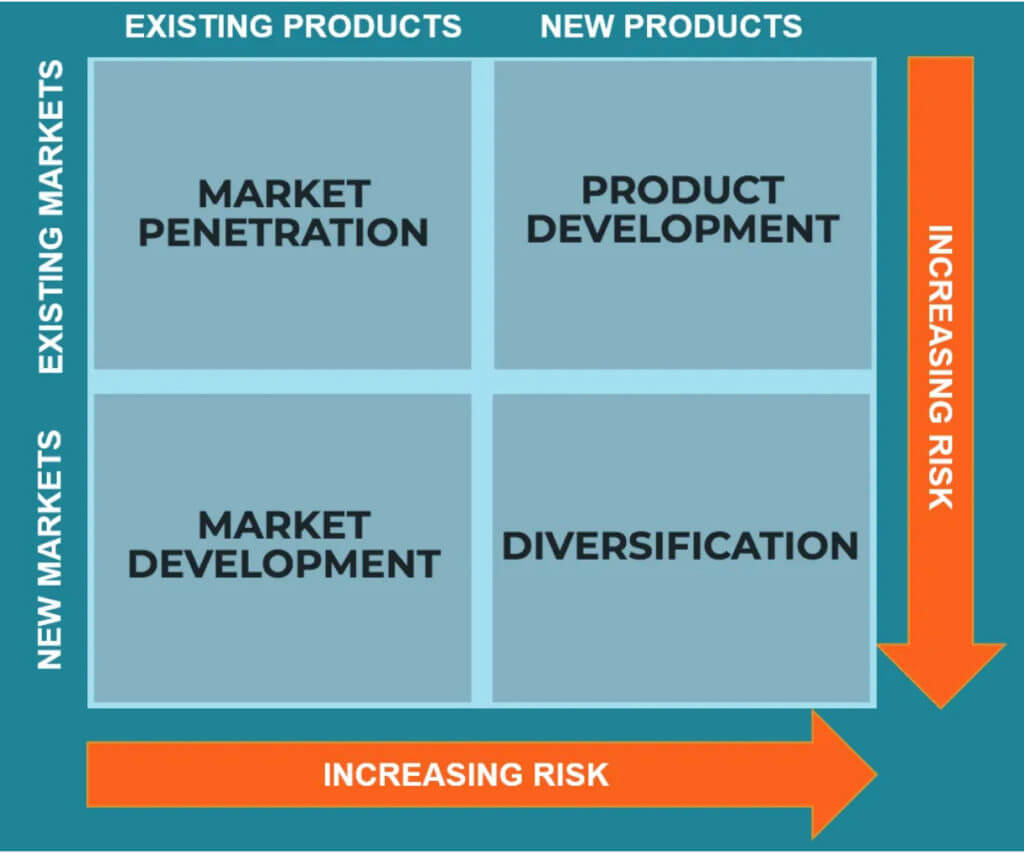
While the tech giants have paved the way, some valuable lessons and strategies emerging tech companies and startups can apply to fuel their own growth:
- Four Major Growth Strategies: Market Development, Market Penetration, Product Development, and Diversification.
- Focus on Customer Experience (CX): CX mapping, persona building, and brand development are crucial for commerciality and operations.
- Innovative Go-to-Market (GTM) Strategies: Develop a comprehensive GTM plan with clearly defined target audience, specific goals, and resource allocation.
- Leverage Technology for Efficiency: Use AI, data analytics, and cloud solutions to improve business processes and KPIs.
- Niche Focus: Many successful tech startups begin by focusing on an unserved niche.
- Continuous Iteration and Improvement: Adopt an agile approach to product development and business operations.
- Strategic Partnerships: Form alliances with complementary businesses to expand reach and capabilities.
- Embrace Cannibalization: Be willing to disrupt your own successful products to stay ahead.
- Focus on Emerging Markets: Identify and invest in new markets that may seem small initially but have the potential for explosive growth.
- Maintain Agility: Create structures that allow for rapid innovation and adaptation to new technologies.
Looking Ahead
As we navigate the AI revolution, it’s crucial for both established companies and startups to understand and apply the principles of the Innovator’s Dilemma. Those who can balance sustaining innovations with disruptive ones, and who are willing to cannibalize their own successful products, will be best positioned to thrive in the rapidly evolving tech landscape. The story of tech’s rise over the past decade is not just about market caps and stock prices. It’s a story of how technology has reshaped our world, for better or worse. As we look to the future, several questions emerge:
- Can these companies maintain their growth trajectories?
- How will emerging technologies like AI reshape the competitive landscape?
- What role will global players, particularly from Asia, play in the tech sector’s future?
- How will societies and governments respond to the increasing power of these digital giants?
One thing is certain: the tech sector will continue to be a driving force in the global economy. As investors, consumers, and citizens, staying informed about these trends is more crucial than ever. The next decade promises to be just as transformative as the last, with AI leading the charge into a new era of innovation and disruption.
Conclusion: Navigate the Tech Revolution with Expert Guidance
The rapidly evolving tech landscape presents both challenges and opportunities for businesses of all sizes. As we’ve explored, the strategies that led to success in the past may not be sufficient for the AI-driven future. Whether you’re a startup looking to disrupt or an established company aiming to stay ahead, expert guidance can be invaluable. As an Optimist Sr. Advisor, Executive Coach, and mentor with over 30 years of experience in the software industry, I’m uniquely positioned to help you navigate these turbulent waters. My expertise in ESG, CSR, Design Thinking, Sales & Marketing strategy, Leadership, and Digital customer-centric transformations can provide you with the insights needed to thrive in this new era. Take the first step towards future-proofing your business strategy. Book a complimentary consultation session with me today. Together, we’ll explore how to:
- Refine your Go-to-Market (GTM) strategy for the AI age
- Enhance your product development process to stay ahead of disruption
- Develop leadership skills crucial for managing in times of rapid change
- Integrate emerging technologies like AI into your business model
Don’t let the pace of change overwhelm you. Let’s work together to turn these challenges into opportunities for growth and innovation. Your journey towards a more resilient, innovative, and successful business starts here – schedule your session now!

 Emmanuel Obadia & Partners | Transform & Innovate