

Marketing, as we once knew it, is dead. The days when CMOs focused solely on advertising campaigns and brand awareness are long gone. Today’s marketplace demands something much more strategic—something that goes far beyond the old marketing playbook. The modern CMO is evolving into a Chief Growth Officer, responsible for driving growth through customer insights, innovative disruption, and an agile, evolving offering. To thrive in this role, CMOs must also elevate their influence within the executive committee, working side by side with the CEO and CFO to shape the company’s strategy and long-term success.

During my time at Salesforce, I witnessed firsthand how shifting from traditional marketing to a customer-centric growth strategy transformed the company into a global leader in CRM. We weren’t just selling software; we were selling transformation. This shift, and my experience working with innovative brands like Sun Microsystems and Oracle, clearly showed me that the CMO is now at the heart of business transformation and growth. The role demands a new way of thinking—one that integrates innovation, customer obsession, agile leadership and the ability to influence key decisions at the executive level.
In this post, I’ll break down how CMOs today must embody four essential roles to become Chief Growth Officers, expanding their influence within the executive committee. By mastering these roles, CMOs can position themselves as strategic leaders driving growth, alongside CEOs and CFOs. Drawing on my own experience and the example of iconic brands like Apple and Tesla—who are redefining the boundaries of both marketing and leadership—this transformation is not just necessary; it’s inevitable.

Guardian of the Brand: It’s About Purpose, Not Just Logos
In the past, brand management was primarily about visibility and recognition. Today, it’s about purpose and trust. The modern CMO is no longer just managing logos—they’re managing the very heart of what the brand stands for. Customers don’t just buy products; they buy into the philosophy and values of the brand. Purpose-driven brands that reflect authenticity and build trust are the ones that thrive. In an executive committee setting, CMOs who control the brand narrative gain significant leverage, helping to steer the company’s strategic direction by ensuring the brand resonates not just with customers, but with investors and stakeholders as well.

Take Apple, for example. Apple isn’t just about innovative products; it’s about a way of thinking—a philosophy that reflects simplicity, creativity, and empowerment. Every Apple store, every ad, and every product reflects this purpose, which is why Apple has built an almost religious following. Apple’s CMO has been instrumental in ensuring that the brand’s message stays authentic and resonant at every touchpoint. It’s not just marketing; it’s brand stewardship.

In my experience at Salesforce, as a VP of Marketing, we did something similar. We weren’t just selling software; we were selling customer success. Our entire brand revolved around enabling businesses to thrive in the digital era. Every piece of communication, every product feature was aligned with that purpose, and it’s this alignment that helped us become a leader in enterprise cloud computing. CMOs must now see themselves as the keepers of this larger brand mission.
And today, I see this same brand stewardship at work with my clients like SODIAAL, where the brand’s message of sustainability and transparency has become central to their success. The CMO’s role in protecting and amplifying this brand purpose is critical for earning trust and driving growth.
Reflect the Customer: Customer-Centricity Isn’t a Buzzword—It’s Survival

Being customer-centric is no longer a nice-to-have; it’s a matter of survival. The CMOs that win today are those who don’t just listen to their customers—they deeply understand their customers’ needs, motivations, and the jobs they are trying to get done. This ability to channel the voice of the customer directly to the executive committee makes the CMO invaluable when shaping business strategy and ensuring the company stays aligned with market needs. The shift from simply reacting to customer feedback to actively shaping offerings based on customer insights is what differentiates market leaders.
McKinsey further emphasizes that companies leading with experience-led growth deliver 30% higher total return to shareholders compared to their peers, highlighting the significant financial benefits of a customer-first approach — read Experience-led growth: A new way to create value.

A great example is Slack. Slack didn’t set out to just build a messaging tool. They listened to what teams actually needed: seamless collaboration and less reliance on email. By tapping into the Jobs-To-Be-Done (JTBD) mindset, Slack identified what their customers were truly trying to accomplish and delivered a solution that met those deeper needs. It’s this level of customer reflection that allowed them to stand out in a crowded market. Also, this kind of insight enables CMOs to speak confidently in the executive committee about how their products resonate with customers and drive revenue.

At Oracle, where I lead EMEA Marketing for Cloud Enterprise Applications, we also implemented a JTBD framework to go beyond surface-level needs. Enterprise clients weren’t just buying software; they were looking for holistic solutions that could streamline operations and save costs. By aligning our messaging and product marketing with those deeper goals, we strengthened customer loyalty and increased retention rates.
In my recent work with Cision, we applied the same approach. Their customers needed more than just press clippings—they wanted actionable insights that could guide their decision-making. By refining the product to meet those underlying needs, Cision is becoming more than just a PR tool: a strategic partner for its clients.
Offer Excellence: Balancing Customer Experience and Market Competitiveness
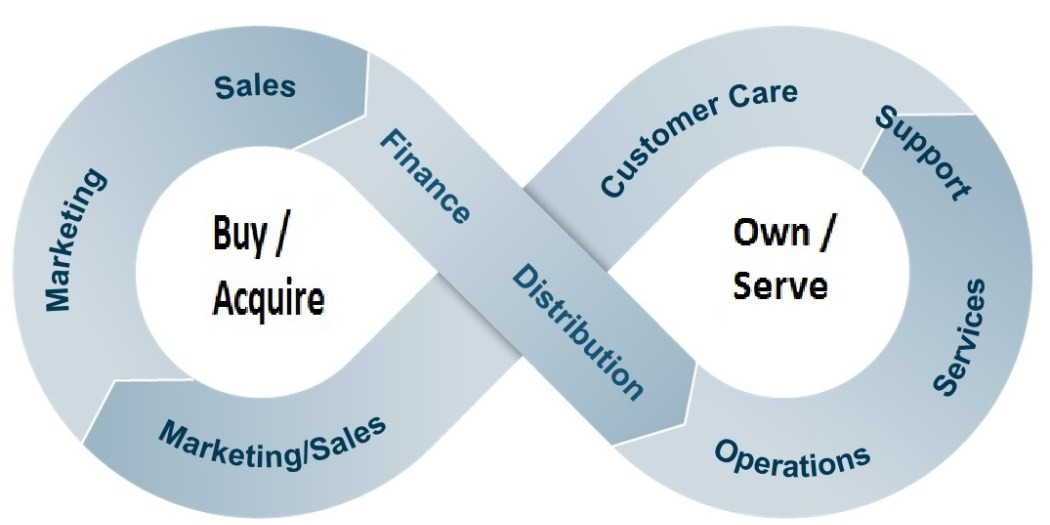
Delivering offer excellence is about far more than just improving your product—it’s about ensuring your offer evolves to meet customer expectations over the long term while staying competitive in the market.
For CMOs, ensuring the company’s offerings continuously meet customer demands positions them as key voices in executive committee discussions about revenue growth and product strategy. The modern CMO must balance multiple factors to remain agile and relevant:
- continuously refining pricing models,
- enhancing the customer experience (CX),
- and adjusting go-to-market strategies
It’s a constant interplay between meeting customer demands and maintaining a competitive edge.
Consider Netflix. They’ve mastered the art of balancing personalization, pricing flexibility, and user experience. Netflix isn’t just competing with other streaming services; they’re competing for customer attention across all digital platforms. Their ability to iterate on pricing models, expand content, and refine the customer journey keeps them not just relevant, but dominant in the entertainment industry.

A prime example of offer excellence is Amazon. Amazon’s ability to enhance its offering—from expanding Prime benefits to personalizing recommendations—shows that excellence is more than just iteration; it’s about creating a holistic customer experience. Amazon’s CMO ensures that every aspect of the offering, from delivery speed to customer service, works in harmony to consistently meet and exceed customer expectations.
At Sage, where I pioneered the role of Chief Product Officer (CPO) for ERP, we approached offer excellence with a similar mindset. We continuously iterated on our small and mid-size businesses solutions, but more importantly, we aligned them with the long-term needs of our customers. This meant adjusting our pricing structures to reflect the true value we provided, refining the user experience to make it intuitive for both SMBs and enterprises, and revisiting our go-to-market strategy to position Sage as a critical business partner. It’s this multi-pronged approach that secured our leadership in key markets. By demonstrating how product decisions directly aligned with customer needs, my role was pivotal in executive committee discussions about growth strategies and competitive positioning.
Offer excellence is ultimately about creating a seamless and evolving proposition—one that adapts not only to immediate customer needs but also anticipates future challenges, all while keeping competitors at bay.
Win with Disruptive Innovation: Lead the Change or Be Left Behind

Innovation is no longer a choice—it’s a requirement. CMOs today must understand that maintaining the status quo is the fastest route to irrelevance. The companies that are leading the charge in their industries are the ones constantly disrupting the market. CMOs who drive disruptive innovation within their companies gain credibility in the executive committee as strategic leaders who can foresee market shifts and position the company to capitalize on new opportunities.
The CMO’s role has expanded from promoting innovation to actively driving it.
The CMO’s role has expanded from promoting innovation to actively driving it. They must foresee customer needs before they even arise and position their company to deliver solutions ahead of the competition.
A prime example of disruptive innovation is Tesla. Tesla didn’t just create electric cars; they disrupted the entire automotive industry by rethinking how vehicles are powered, how they are sold, and how they are driven. Tesla’s CMO has been critical in communicating this innovation as part of the brand’s DNA, positioning Tesla not just as a car manufacturer, but as a leader in the future of transportation and sustainability.
At Sun Microsystems, where I led product field marketing globally, we faced a similar challenge of disruption. We knew that the tech landscape was shifting toward cloud computing and open-source technologies. Instead of reacting, we led the change, positioning Sun as a pioneer in these fields. By embracing disruptive innovation early, we kept Sun ahead of the curve and in the conversation as a forward-thinking tech leader.
Today, it’s not enough to innovate reactively. CMOs must take charge of disruptive initiatives, driving innovation within their companies before competitors do. Whether it’s adopting new technology, transforming the customer experience, or redefining entire industries—those that lead the change will win the future.
Conclusion: The CMO as Chief Growth Officer

Forget traditional marketing. The role of the CMO has evolved into something far more strategic and essential for business growth. Today’s CMO is a Chief Growth Officer who drives transformation by leading with brand stewardship, reflecting deep customer insights, ensuring offer excellence, and embracing disruptive innovation. With these skills, CMOs not only drive marketing strategies but also become critical influencers within the executive committee, guiding the company’s overall direction. The future belongs to those CMOs who can blend creativity with strategy and guide their organizations through an ever-changing market.
Today’s CMO is a Chief Growth Officer who drives transformation by leading with brand stewardship, reflecting deep customer insights, ensuring offer excellence, and embracing disruptive innovation.
If you’re a CMO or an executive looking to transform your approach and become a true Chief Growth Officer, I’d love to help you get there. Let’s connect for a complementary fit session, where we can explore how I can support your journey and elevate your leadership to drive sustainable growth in your organization. Click here to schedule your session and start building your path to success.

 Emmanuel Obadia & Partners | Transform & Innovate