
Introduction

Every MBA grad and their grandmother has heard of the Triple Bottom Line (TBL): People, Planet, and Profit. Coined in the early ’90s by John Elkington, TBL pushes companies to look beyond just profit, encompassing three essential pillars: People (social equity), Planet (environmental health), and Profit (economic prosperity). It’s a framework that challenges businesses to measure success not just by financial gain, but also by their socio-environmental impact.
Sounds fancy, right? But it’s whispered in boardrooms across Europe and America as the “nice idea that’s impossible in practice.” Well, dear readers, Interface didn’t just whisper back; they yelled from the rooftops, proving naysayers wrong.
The Vision and Mission of Interface
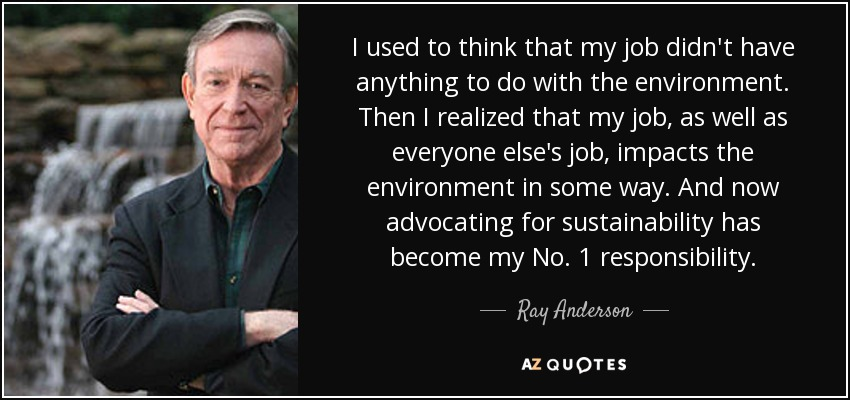
Enter Ray Anderson, a CEO who became the unlikely eco-hero of the carpet industry. He didn’t just sip the sustainability Kool-Aid, he chugged it. During a routine quest for a new company vision, Anderson was profoundly moved by Paul Hawken’s ‘The Ecology of Commerce,’ realizing that his company was plundering the environment. This epiphany was so potent that a mere adjustment wouldn’t suffice. Anderson radically recalibrated Interface’s trajectory. He wasn’t content with a marginal shift; he aimed for the stratosphere with ‘Mission Zero’: a pledge to eliminate the company’s environmental footprint by 2020. Not reduce. Eliminate. A daring goal that sent ripples throughout the corporate world. Boom!
As a result of his audacious sustainability initiatives, Interface not only significantly reduced its environmental impact but also witnessed a remarkable 266% increase in its stock value over a decade, demonstrating that going green can be lucratively golden for the bottom line.
The Change Management Process
You might wonder, how did Interface pull off this Herculean feat? Two words: Change Management. It’s not just jargon; it’s the playbook for organizational transformation.
Drawing inspiration from Kotter’s 8-Step Process, Interface was on the move:
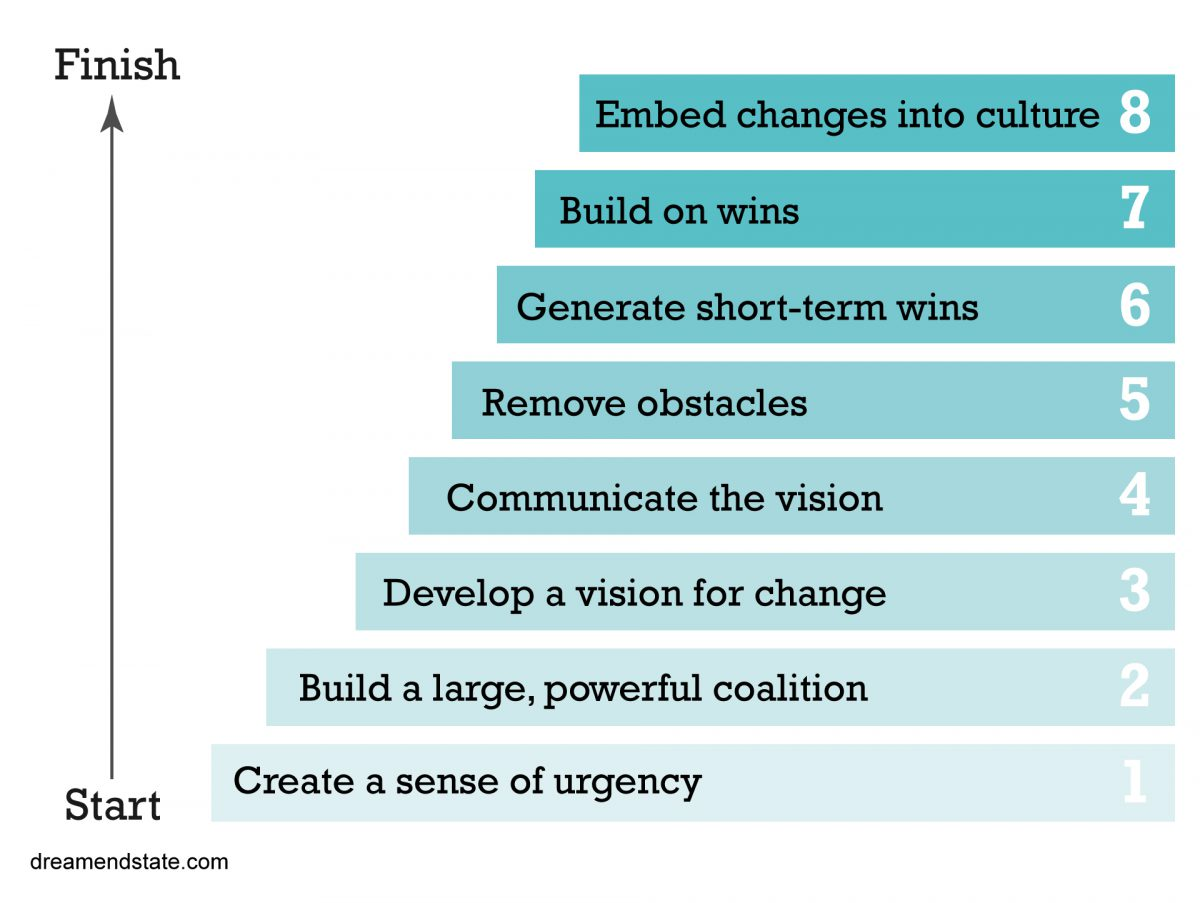
- Urgency? Check. They had a burning platform, and it wasn’t the Earth. It was their commitment to doing better.
- Guiding Coalition? Double check. A team of mavericks led the charge.
- Clear Vision? Crystal. Mission Zero was their North Star.
But let’s not get lost in the sauce. The linchpin? Authentic Leadership. In a world abounding with CEOs splashing buzzwords, Anderson stood apart, embodying every word with genuine action. He wasn’t just leading; he was living the mission. This authenticity was palpable, and his drive trickled down, turning even the most skeptical employees into sustainability soldiers.
When we talk corporate lingo, “sustainability” and “profit” often sound like they’re in a boxing match, each in opposite corners. The prevailing myth? You can’t have soaring profits and care for the planet. But guess what? That’s old-school thinking. The future belongs to those audacious enough to prove this oxymoron wrong.
Interface did just that, and the numbers speak volumes:
- Carbon Footprint Reduction: A 69% reduction by 2019.
- Waste to Landfills: A decline of 91%.
- Water Conservation: A cutback by 89% from 1996 to 2017.
- Renewable Energy: Hitting the 89% mark in 2019.
But Interface isn’t the lone ranger in this journey. Several titans have embraced this paradigm shift:

- Patagonia: Not just a cool jacket brand, but a company that donates its entire Black Friday sales to grassroots environmental groups. Profit and planet? They’re doing both.
- Unilever: A corporate behemoth that’s proving sustainability isn’t just for niche brands. With their Sustainable Living Plan, they’re embedding eco-consciousness into every aspect of their vast empire.
- Tesla: Because who said electric cars can’t be sexy? Musk’s brainchild is leading the auto industry’s charge (pun intended) into a greener future while racking up billions in valuation.
- Let’s not forget about the bold $2B decision made by CVS in 2014 – check my post about it
Each of these pioneers recognized the gold at the intersection of audacity and accountability.
It’s not just about the green for the environment; it’s also about the green in their bank accounts.
The Call to Action
Here’s the deal: You’re no doubt sitting there, coffee in hand, thinking, “Great for Interface, but what about my company?” That’s where I come in. Transforming your organization from just another corporate entity to a triple bottom line (#TBL) titan isn’t rocket science, but it does require expertise. Mine, to be specific.
Let’s chat, figure out your ‘Mission Zero,’ and then? Let’s achieve it.
Conclusion
Triple Bottom Line. It’s not a myth. It’s not just a “nice-to-have.” It’s the future of business. Interface nailed it. Now, it’s your turn. Do you have the audacity?

 Emmanuel Obadia & Partners | Transform & Innovate